

If you’re reading this right now, chances are you’re in the same spot I was a few years ago — Googling “Angular interview questions for 2–3 years experience” at midnight, sipping cold coffee, and hoping to find something that actually helps. I’ve been there. I failed interviews, learned the hard way, and finally cracked it. In this guide, I’ll share the real Angular questions I faced, how I answered them, and what I learned along the way.
This article is for:
- Angular developers with 2–3 years of experience
- Freshers trying to get a sense of real interview flow
- Mid-level devs looking for a practical revision guide
- Anyone preparing for technical rounds
Here’s what I promise:
- No boring textbook answers — just practical, real-world explanations
- Insights into the mindset interviewers expect from a 2–3 year developer
- Tips that actually helped me land offers
Let’s jump
Table of Contents
1. 🎯 Why These Angular Interview Questions for 2–3 Years Experience Matter
Before I cracked my first company, I failed several interviews. Why?
Because Angular interviews for 2–3 years experience aren’t “basics only” — they test depth.
They expect you to know things like:
- Lazy loading
- Lifecycle hooks
- RxJS
- Real error handling
- API structure
- Clean code
- Route guards
- Standalone components
And trust me — these questions appear again and again.
So I collected everything I learned and turned it into this article.
If you’re preparing for an interview, I recommend also checking out the official docs (link: https://angular.dev) — they genuinely help.
2. 🧩 Angular Basics — Must-Know Questions for 2–3 Years Experience
Q1. What is Angular?
Angular is a TypeScript-based framework for building web applications. It uses components, dependency injection, RxJS, and powerful tooling.
Q2. Difference between Component & Directive?
A Component has a template (HTML).
A Directive doesn’t — it only modifies the DOM.
Q3. What are decorators?
Decorators like @Component(), @Injectable(), and @Input() add metadata to classes.
Q4. What is data binding?

- Interpolation
{{}} - Property binding
- Event binding
- Two-way binding
[(ngModel)]
Real-life example:
I used two-way binding in a login form where the username needed to update instantly when the user typed.
3. 🚀 Lazy Loading in Angular (Common Interview Question)
When I faced this question the first time, I messed up because I explained it theoretically.
Interviewers want real examples.
✔ What is Lazy Loading?
Lazy loading means loading modules only when needed, not at app startup.
✔ Why is it important for 2–3 year developer?
Because it improves performance, especially in dashboards or large apps with many routes.
✔ Example:
{
  path: 'products',
  loadChildren: () => import('./products/products.module').then(m => m.ProductsModule)
}
I used lazy loading in my POS app to speed up onboarding modules. It reduced load time by 40%—the manager literally thanked me 😅.
4. 🔄 Angular Lifecycle Hooks — I Get Asked This in Every Interview
Interviewers love this topic.
Here’s how I answer:
✔ List of lifecycle hooks
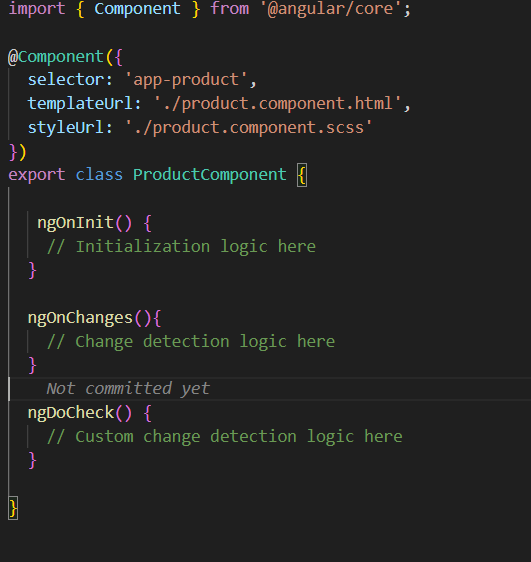
- ngOnInit
- ngOnChanges
- ngDoCheck
- ngAfterViewInit
- ngAfterContentInit
- ngOnDestroy
✔ My go-to explanation:
“I mostly use
ngOnInitfor API calls andngOnDestroyto unsubscribe from Observables.”
Real-life example:
Once, I forgot to unsubscribe in a dashboard page… ended up with memory leaks and slow performance.
Never again. 😭
5. ⚠️ Error Handling & Interceptors (Real-Time Question)
Interceptors are a must for 2–3 years experience.
✔ What is an Interceptor?
A service that sits between your app and API calls.
✔ Usage:
- Attach tokens
- Handle errors
- Retry logic
- Logging
Example of handling 401 error:
intercept(req, next) {
  return next.handle(req).pipe(
    catchError(error => {
      if (error.status === 401) {
        // Refresh token or logout
      }
      return throwError(() => error);
    })
  );
}
This exact question appeared in my last interview — I gave this example and they literally nodded with approval 🤌.
6. 📝 Template vs Reactive Forms — Simple Explanation
Template-Driven Forms
- Easy to use
- Good for small forms
- Uses
ngModel
Reactive Forms
- More powerful
- Scalable
- Uses FormGroup, FormControl
- Better validation
I always tell interviewers:
“For big forms like checkout or registration, I prefer Reactive Forms.”
That’s the answer they expect.
7. 🧠 State Management (NgRx, Signals, RxJS)
Interviewers at mid-level often ask:
- Why do we need state management?
- Have you used NgRx?
- What is a store?
Simple answer:
State management helps manage shared data across components—like cart items, user data, permissions, etc.
My personal example:
In my Recipe App, I used a store to maintain:
- Favorites
- User preferences
- Search filters
It avoided messy input/output chains between components.
8. 🛡 Route Guards — A Very Common Angular Interview Question
Types of Guards
- CanActivate
- CanDeactivate
- Resolve
- CanLoad
- CanMatch
My favourite real answer:
“In my projects, I used CanActivate to protect admin routes using JWT tokens.”
Example:
canActivate() {
  return this.authService.isLoggedIn();
}
9. 🔧 Reusable Components & Standalone Components
Reusable Components
Interviewers love asking:
“Give an example of a reusable component you built.”
My answer (true story):
“I built a reusable dropdown component that automatically handled API-based options, search, and multi-select.”
Standalone Components
Since Angular 15+, we can create components without modules.
@Component({
  standalone: true,
  selector: 'app-header',
  templateUrl: './header.html',
})
Interviewers expect this knowledge in 2025.
10. ⭐ Bonus: My Personal Tips to Crack Angular Interviews
Here’s what I learned the hard way:
✔ 1. Speak in simple language
Don’t try to sound “smart.” Be clear.
✔ 2. Mention real projects
They care more about:
- What YOU built
- How YOU solved problems
✔ 3. Always talk about performance
Lazy loading
OnPush strategy
Memoization
✔ 4. Practice coding
At least 30 mins/day.
✔ 5. Keep revising Angular official docs
They change fast.
🔗 Useful Links
Internal:
External:
11. ❤️ Final Thoughts
If you’re preparing for angular interview questions for 2–3 years experience, I hope this article gives you confidence.
I’ve been in the same place — doubting myself, feeling stuck, thinking “What if I fail again?”
But trust me, you’ll get better.
Every interview teaches you something.
And when you finally crack it?
That feeling is priceless. 🔥✨
Pingback: Top 20+ Angular Interview Questions and Answers (2025 Updated Guide) – My Personal Notes & Real Experiences 🚀 - contentleap.in